
Protection of small elements of cultural heritage
———————————————————————————————————————————————————————–
In Figure 1 we present an example of the loss of cultural heritage. In the first row on the right, we can see the building as it existed in 2007. After 15 years, only the torso of one corner part remained of it – the bottom row on the right.
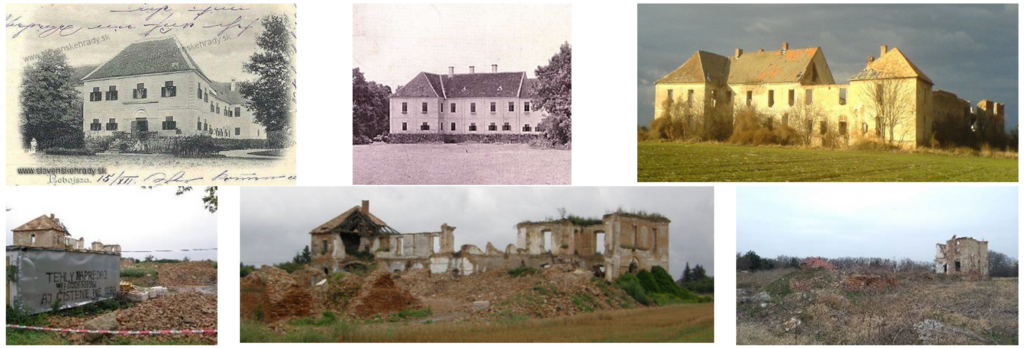
Figure 1.: “Nebojsa” mansion in Slovakia. From the left side from the top: The mansion from the postcard from 1899, the mansion from the postcard before 1945, the mansion in 2007, an inscription describing the sale of bricks, the abandonment and deliberate dismantling of the mansion, the rest of the mansion in 2022.
The situation with small monuments is even worse. We can say that 3D models, from the point of view of their practical use, are really useful as a tool for the protection of cultural heritage. In our surroundings, we often witness that elements of our culture, but especially elements of past generations, are changing. They are adjusting. For example. Many statues, plaques, etc. they are given a new look, a more modern look to respond to the thinking of our time. The facades of buildings, decorative ornaments are changed, the designer elements are smoothed out and transformed. And since their size is small, they are easily removed and can quickly become a victim of developers or innovators’ efforts, which permanently destroys them and we lose part of our cultural heritage. We will lose memories from the lives of our parents and grandparents and we will lose part of cultural and social life.
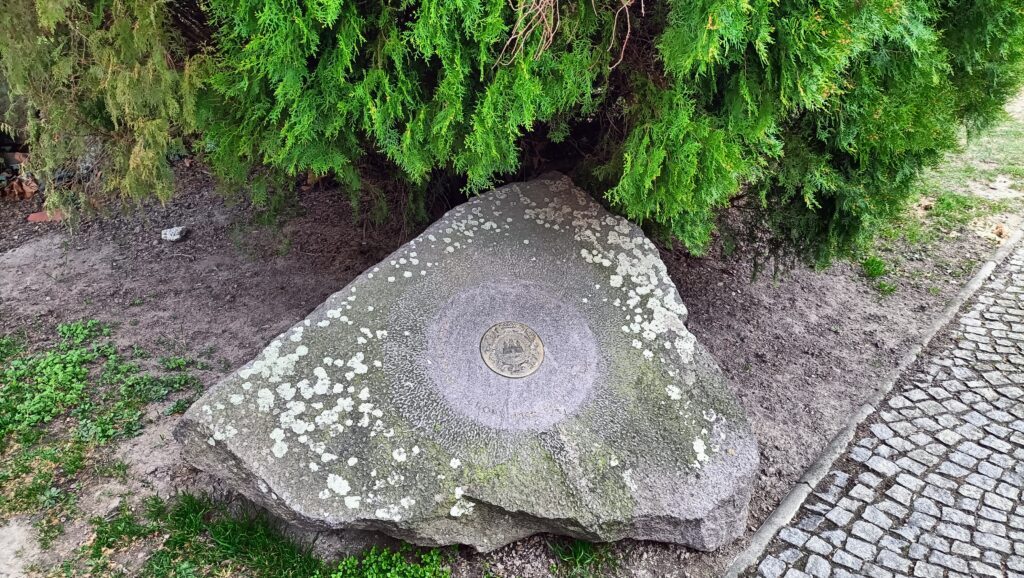
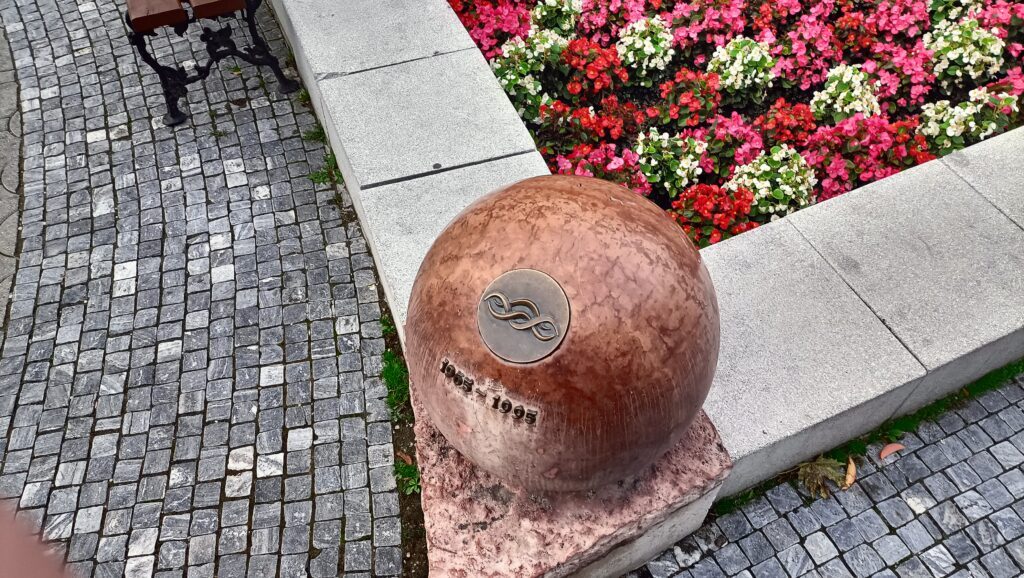
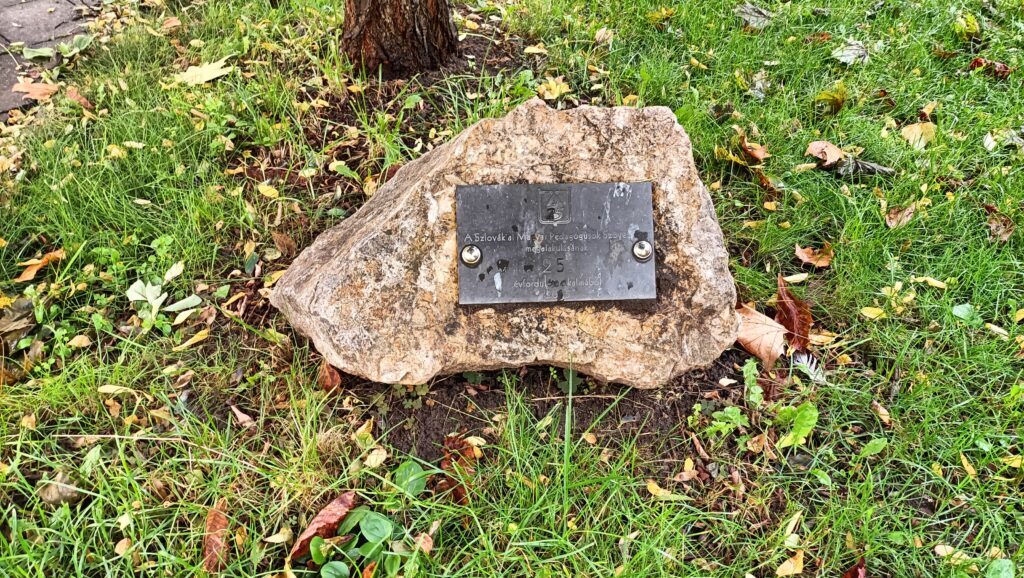
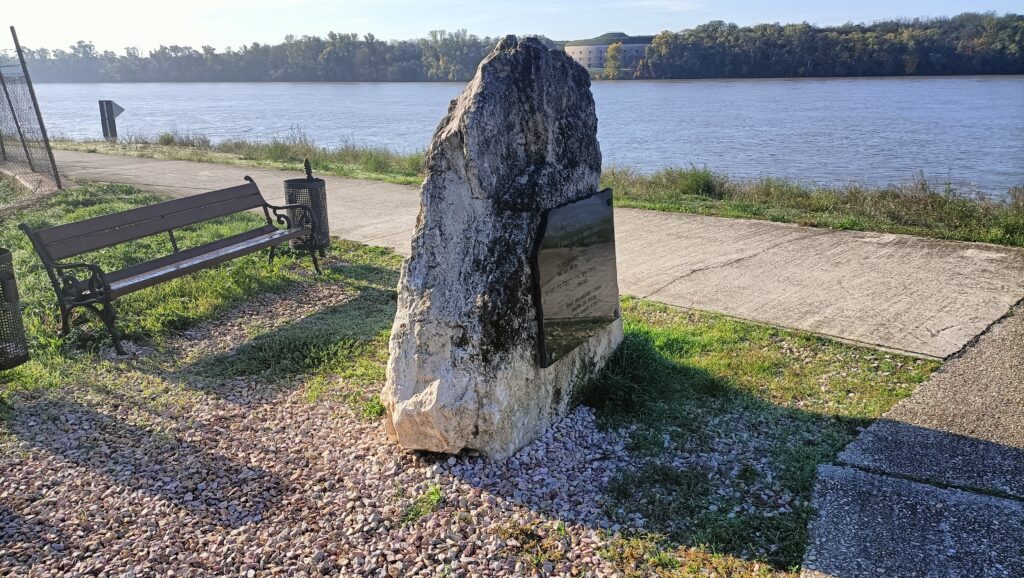
Figure 2.: Example of small monuments
That’s why we try to preserve them in digital form. A big help in our efforts is photogrammetry, where we make significant use of it. Currently, commonly available technical means are already at such a level that they allow their use not only for recreational activities, but can also replace professional means to a significant extent. The created 3D models are also of great importance in the educational sphere, where the great benefit is not the sculpted model but the created model from a real object.
Currently, the most widely used photogrammetric method is convergent imaging with a general orientation of the image axis. It is a multi-frame method that requires special photogrammetric software for analytical processing. The biggest advantage of convergent imaging, compared to stereophotogrammetry, is the just-mentioned general position of the axes of the camera shots (albeit always in an effort to maintain a sufficient overlap of the images and for the object in the images to occupy the largest possible area), and thus using this method objects of any shape can be measured and dimensions.
———————————————————————————————————————————————————————–
We will give at least some examples for all examples:
loading map - please wait...
1.: A jewel from the days of the former regime
The following 3D model represents the cultural heritage of the socialist regime. Slowly, the ravages of time are being signed on the statue. Since there is not much interest in repairing it, it represents an exceptionally beautiful element of a bygone era that is in decline. Our aim is to preserve such and similar small monuments.
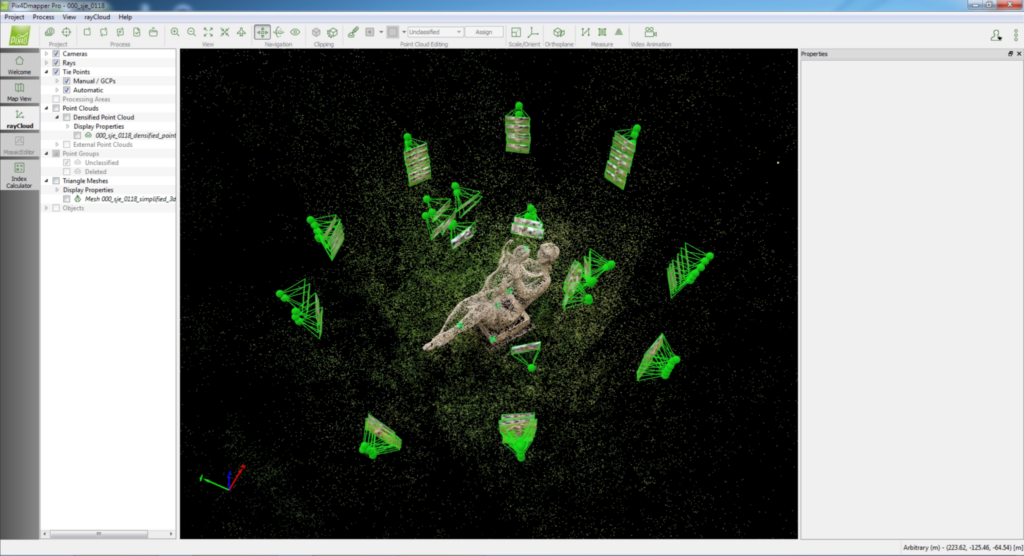
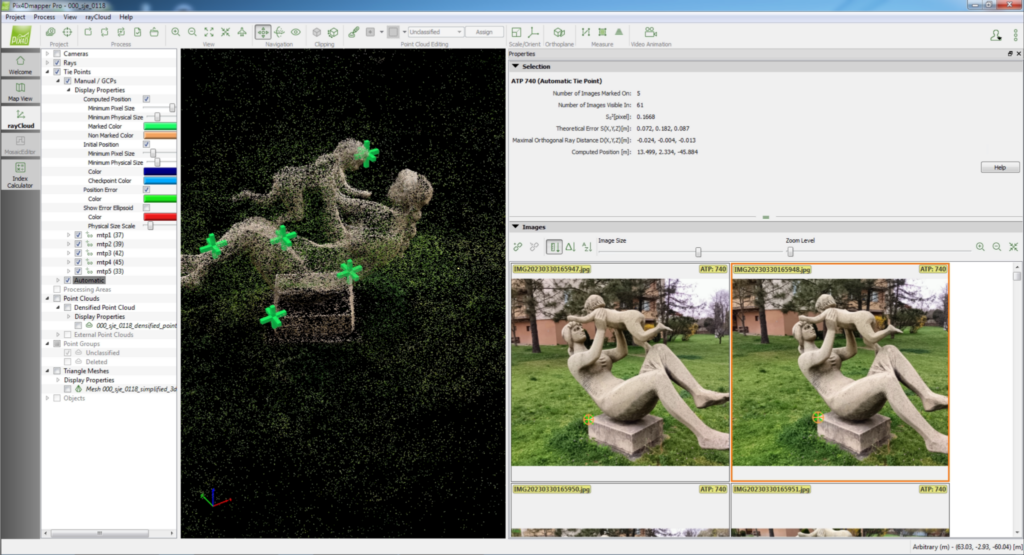
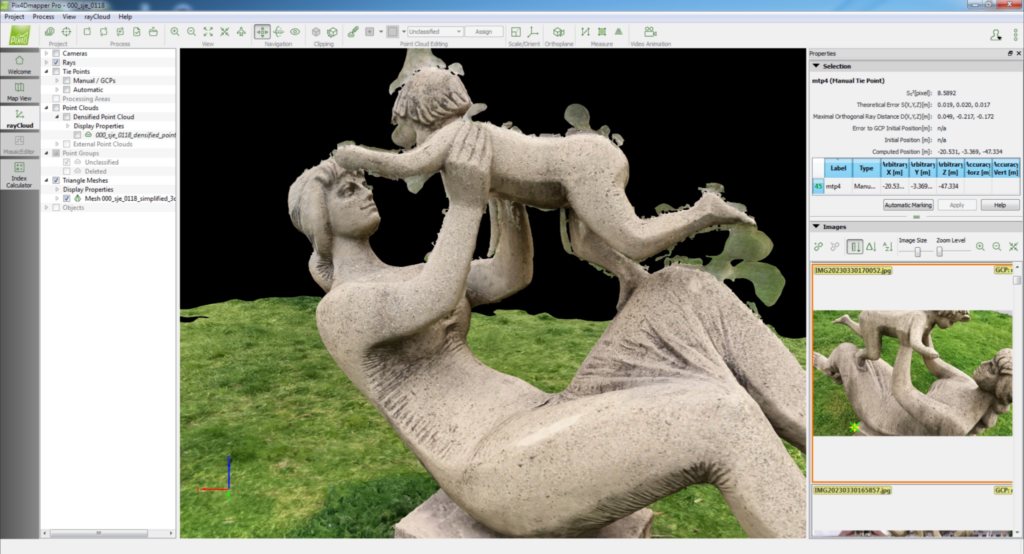
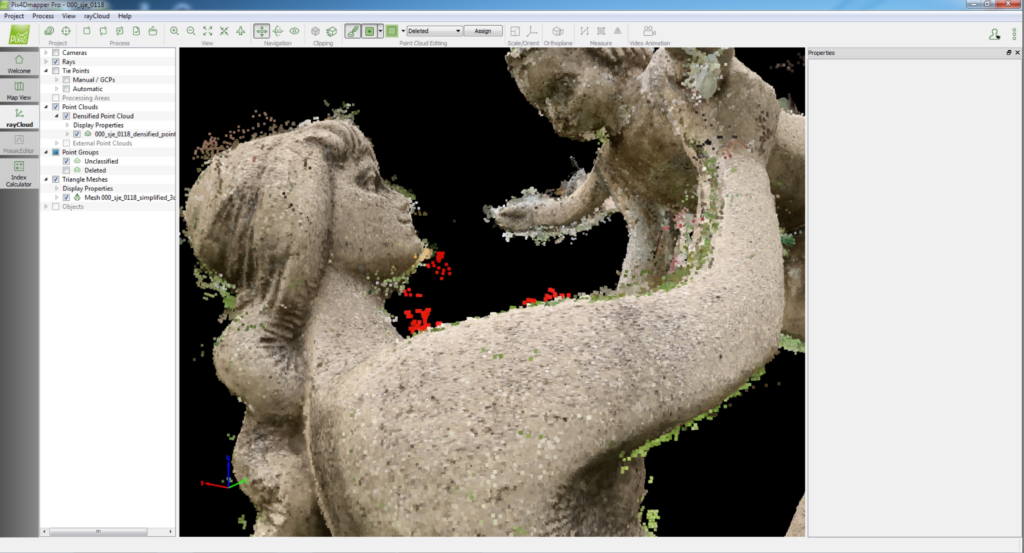
Figure 3.: 3D model creation steps (from top left): loading cameras and image, adding manual Tie points, model errors, removing errors by editing – removing point clouds
Figure 4.: Final 3D model
2.: Monument to the most devastating floods on Danube in 1965
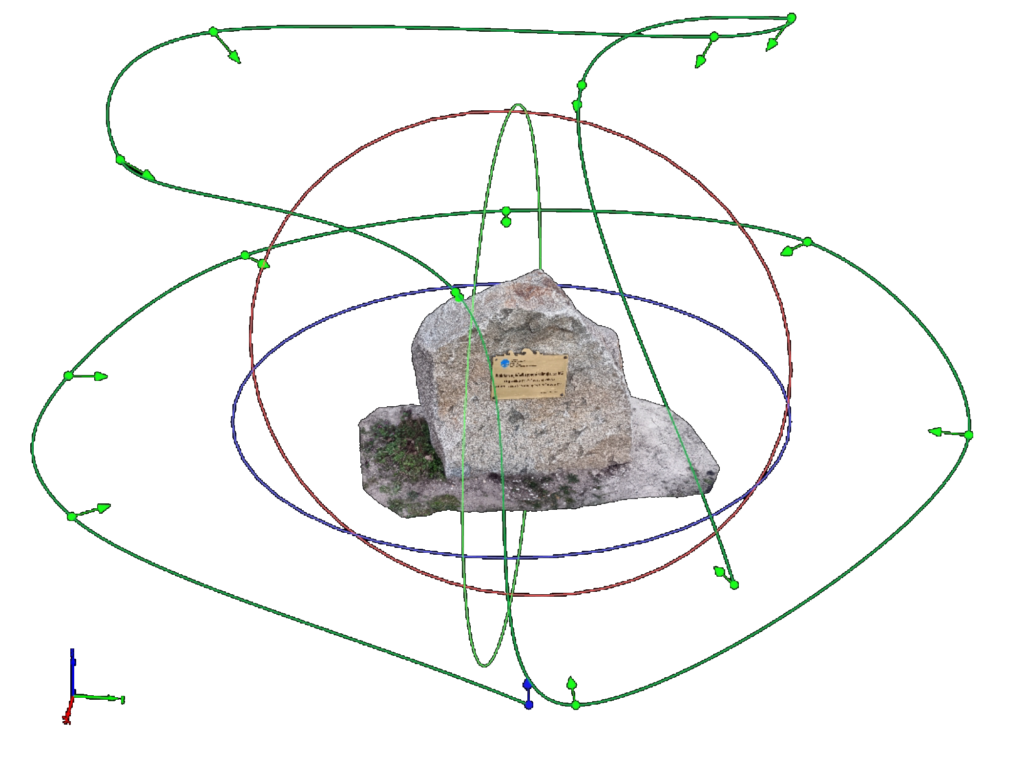
The Danube flood of 1965 flooded 46 villages and the cities of Komárno, Dunajská Streda and Kolárovo. Members of the Soviet units temporarily stationed on Hungarian territory also offered help to the affected residents. They came with amphibious vehicles and their commanders. Members of the Hungarian army also provided similar assistance. The flood on the Danube in 1965 meant a disaster, due to which 54,000 people had to be evacuated on Rye Island. The crop was destroyed on 94 thousand hectares of land.
Clicking on the image will redirect you to the 3D model located on Sketchfab.
A képre kattintva a Sketchfab-on található 3D modellre juthatsz.
3.: Monument to the Victims of the Holocaust
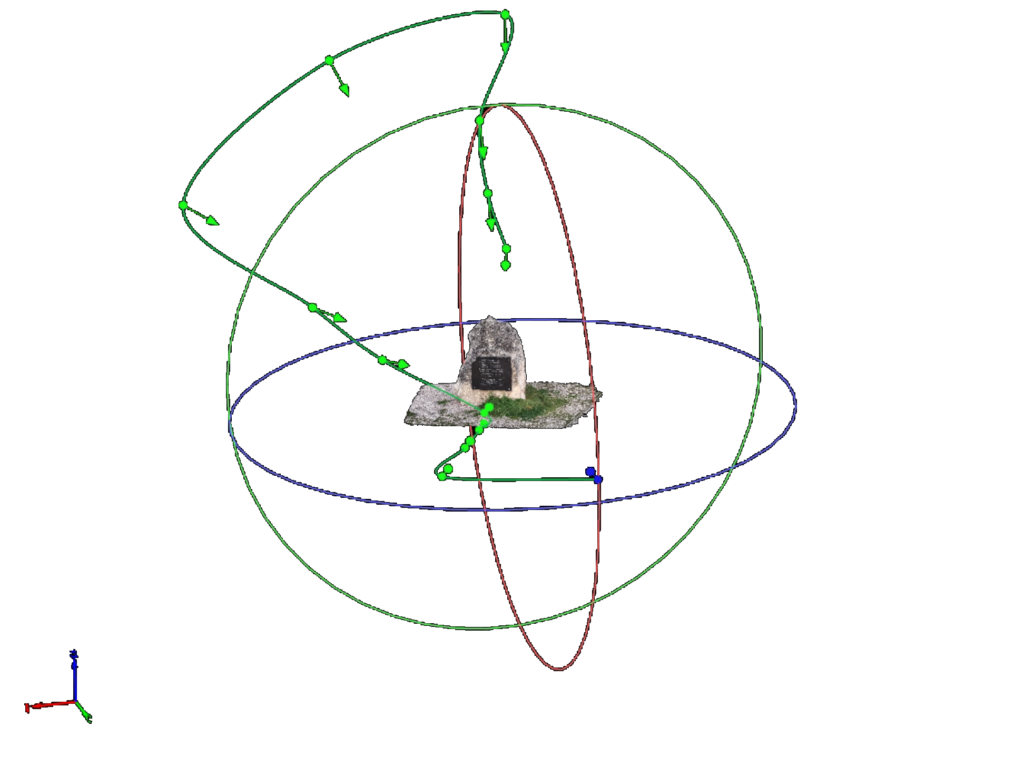
Members of the so-called police department in this place in 1944-45, the Nilas shot Jews and threw them straight into the Danube, as long as the river was frozen, they submerged them under the ice. It is a sad but almost forgotten part of our history. This place is no longer known by many young people. Today, this event is commemorated by this monument on the banks of the Danube River, where there is now a cycle path rest area and a magnificent view. (See. Figure 2 first slide)
Clicking on the image will redirect you to the 3D model located on Sketchfab.
A képre kattintva a Sketchfab-on található 3D modellre juthatsz.
———————————————————————————————————————————————————————–
Research team:
Ing. Ondrej takáč, PhD.

RNDr. Jozsef Udvaros, PhD.
Research team, J. Selye University